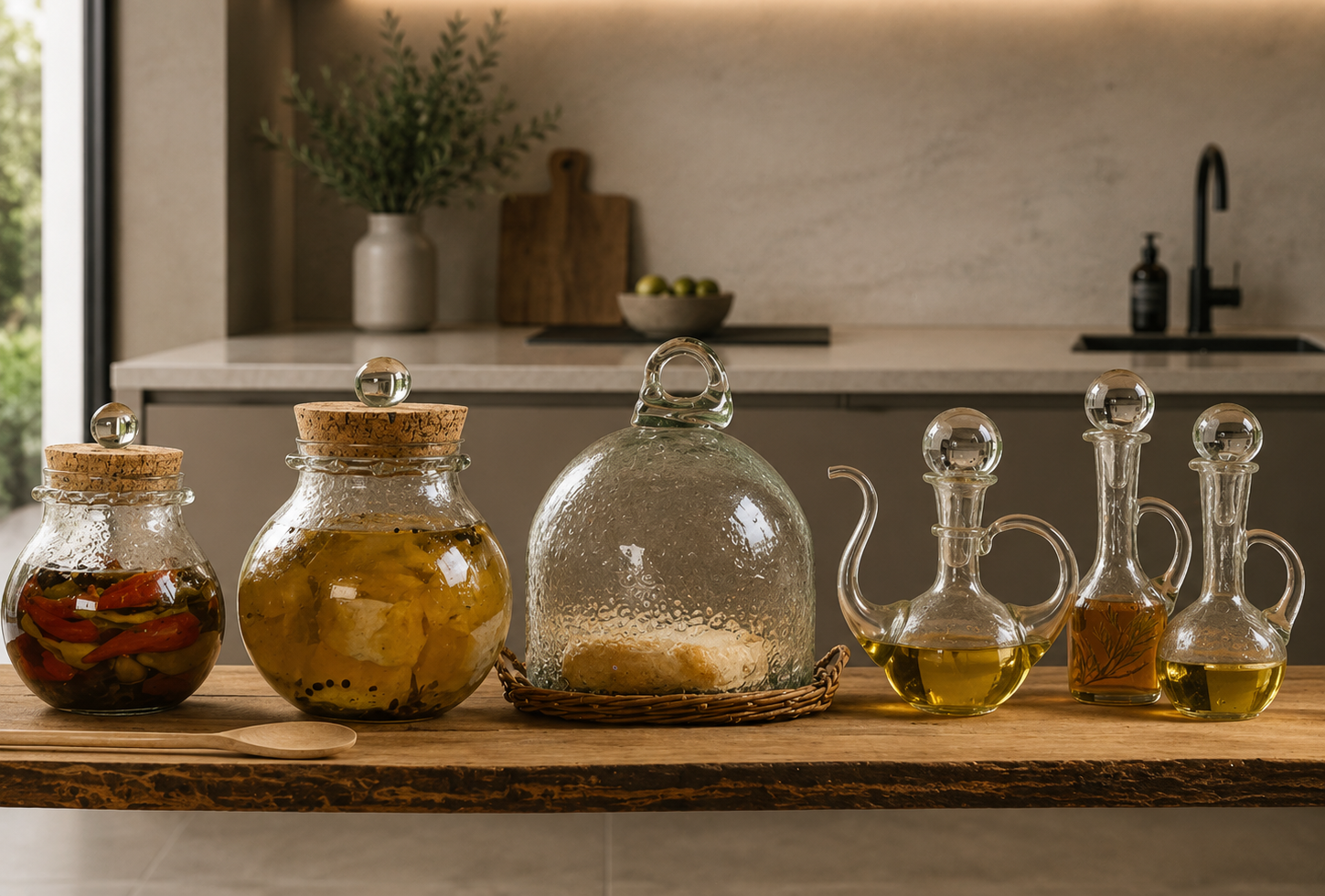
Today's trend is toward a kitchen designed as a living space, more open and lived-in. It is displayed rather than hidden: shelves reveal their contents, while everyday objects become genuine decorative elements. The kitchen is now conceived as a living space, with the counter top transformed into a stage that is both lively and elegant, a stage for everyday life.
This is where Biot's hand-blown bubble glass pieces come into play. Jars, oil cruets and other utensils transform an ordinary kitchen into a Mediterranean kitchen full of character.
Jars: the grocer's style, showcased and so much more
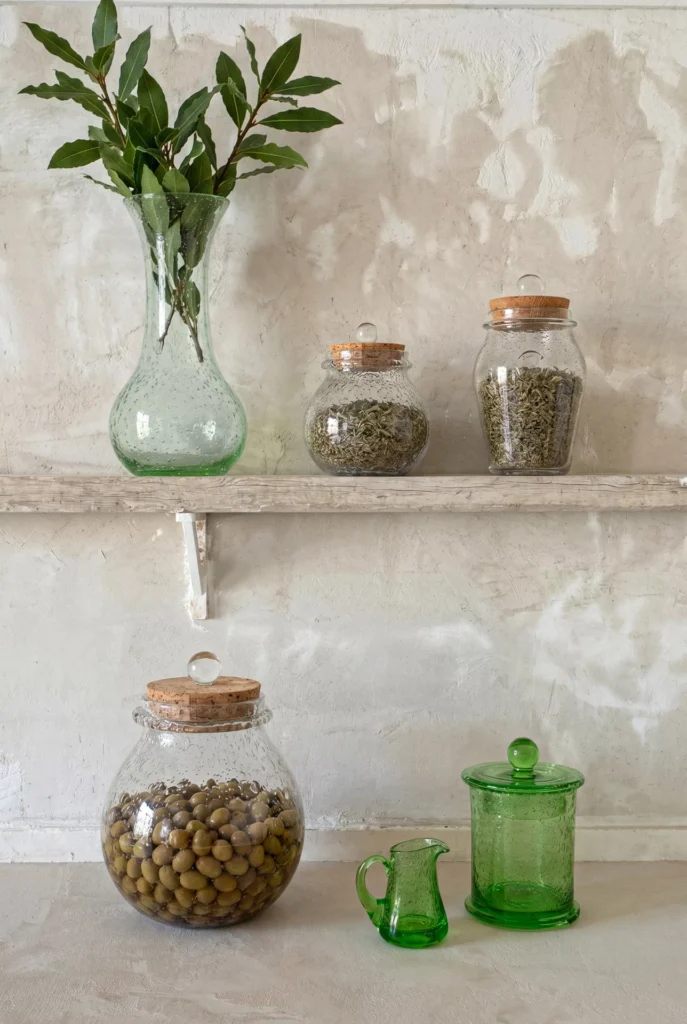
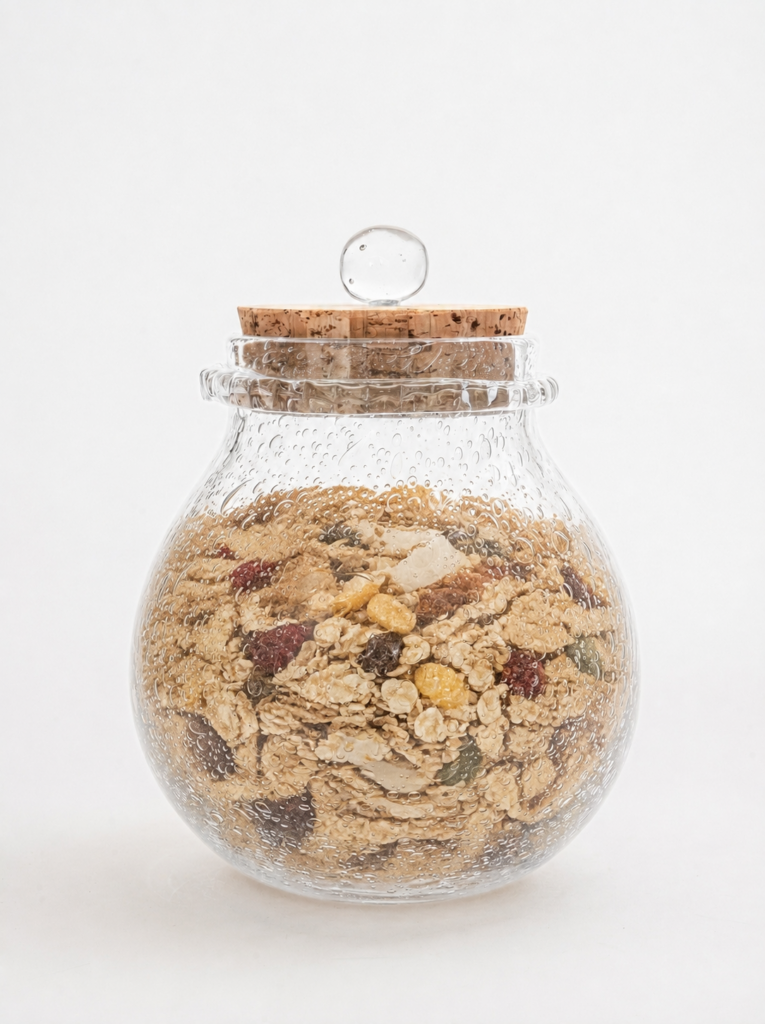
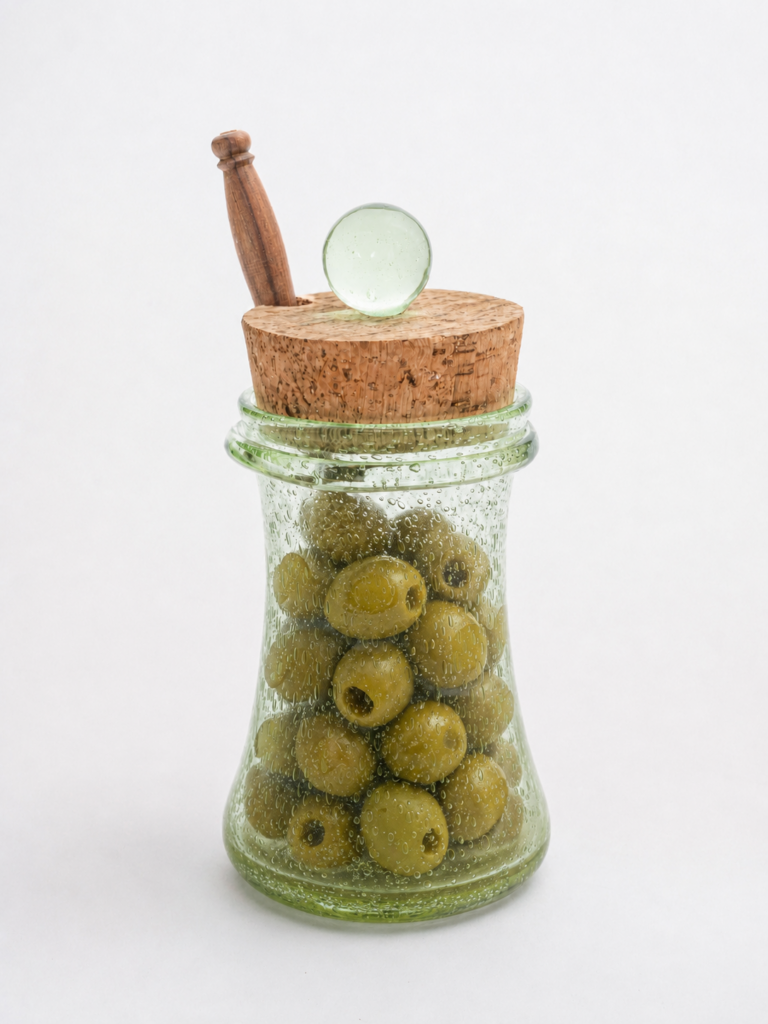
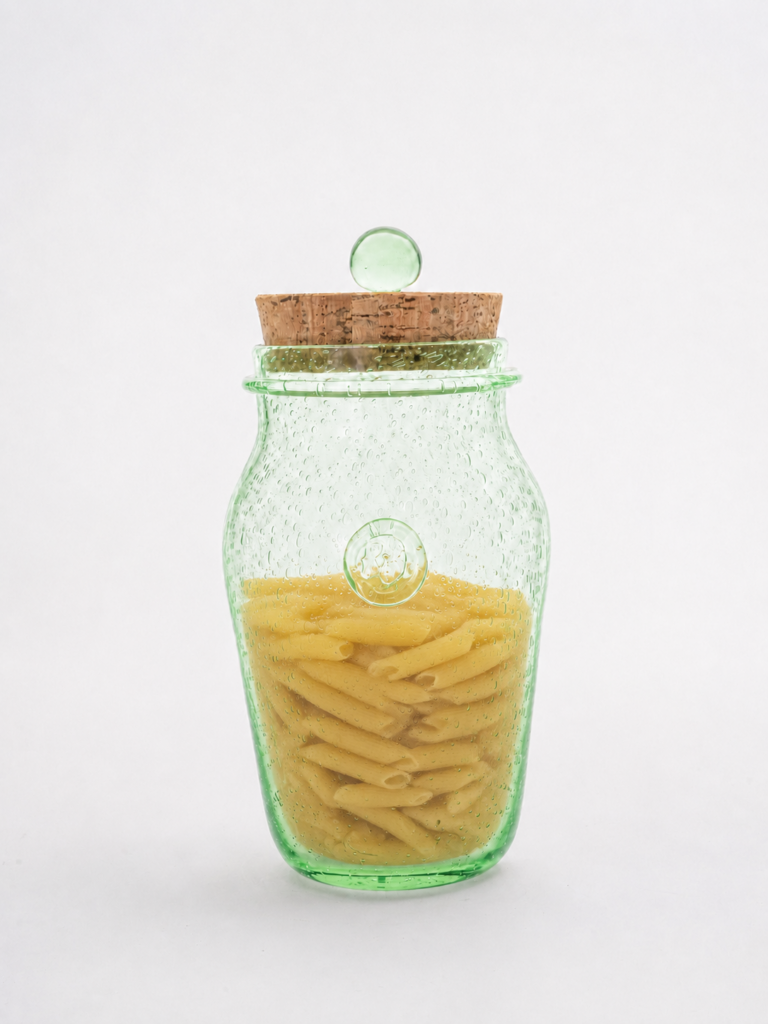
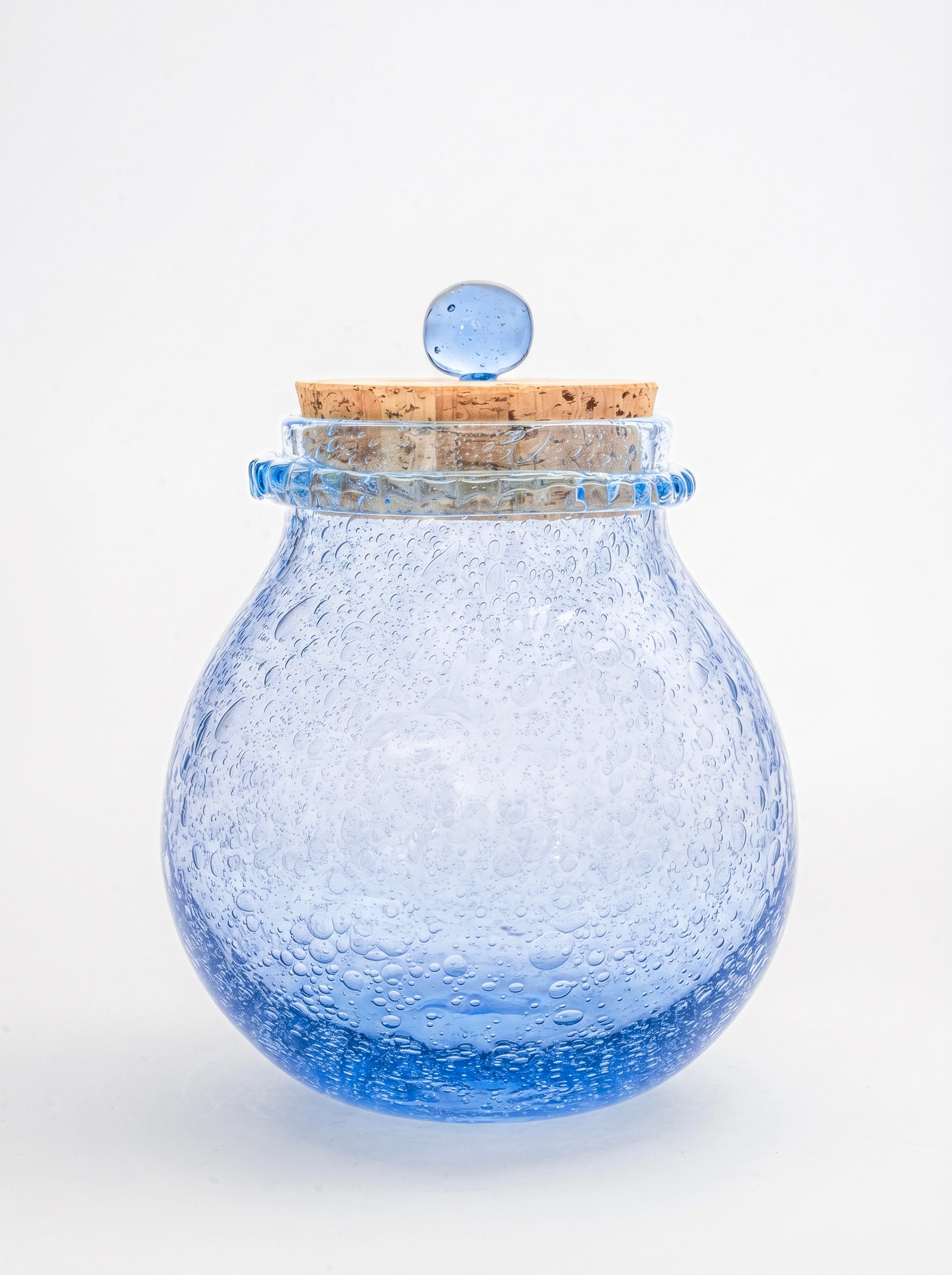
Bubble glass jars are no longer just practical objects: they become genuine decorative elements. On an open shelf, they display everyday pasta, legumes or spices. All while adding a handcrafted touch to the kitchen.
Unlike a classic, often plain jar, the glass bubbles catch the light and add depth to the composition.
One idea: turn the jar into an improvised vase. Filled with a few sprigs of dried lavender, a bundle of wheat or a sprig of eucalyptus, it becomes a rustic, poetic object, in keeping with the spirit of a Provençal kitchen. There's no need for elaborate arrangements: garden herbs, dried aromatics or a few grasses are enough to bring a touch of natural charm.
Some jars even become genuine collector's items. Colourful apothecary jars, displayed in a trio on a windowsill or shelf, can hold dried herbs for cooking or infusions, or simply stand on their own. Light passing through the bubble glass then creates a warm, distinctive atmosphere.
"Their shape alone is enough to create a composition."
A charming centrepiece for a kitchen with Mediterranean accents: the olive demijohn makes its presence known through its generous dimensions. Displayed alone, paired with dry branches, or with a more voluminous floral arrangement, it takes on an almost sculptural dimension in the kitchen.
Oil and vinegar cruets: the pieces that bring the countertop to life
Placed on the countertop, hand-blown oil and vinegar cruets are not simply utensils to be put away after use.
"They are permanent fixtures that inhabit the kitchen and contribute to its identity."
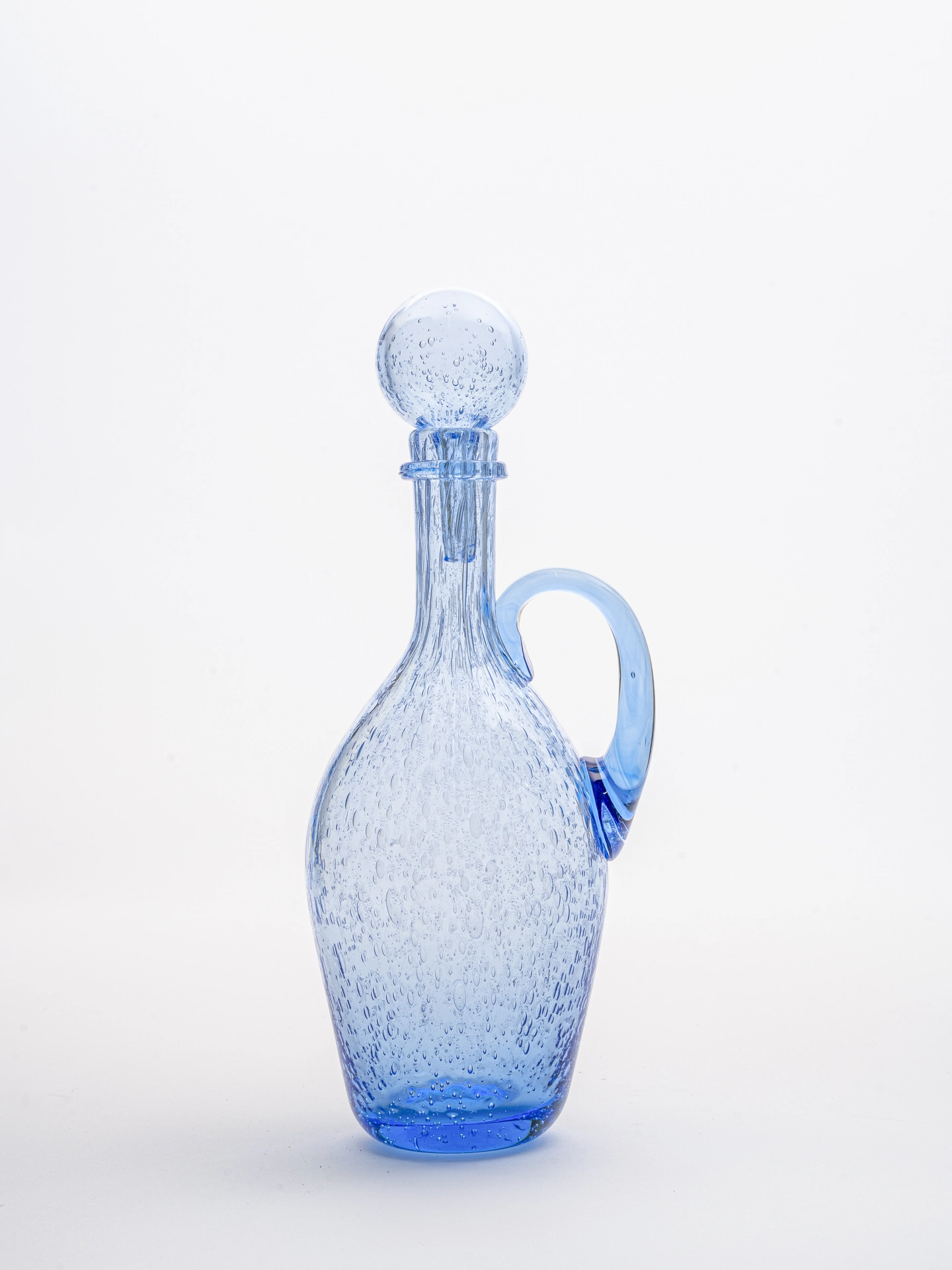
The straight oil cruet charms with its slender, understated silhouette that fits easily into any kitchen. In white or blue, it brings a touch of freshness while remaining discreet.
The round oil cruet asserts a more generous, Mediterranean style. With its soft, rounded forms, it belongs to the world of old-fashioned Provençal kitchens, where one takes one's time and cooks with pleasure.
Also discover the Provençal essencier, historically used for essential oils and today repurposed as a traditional oil cruet. Imposing and elegant, it suits kitchens that embrace their character and their attachment to local, traditional flavours.
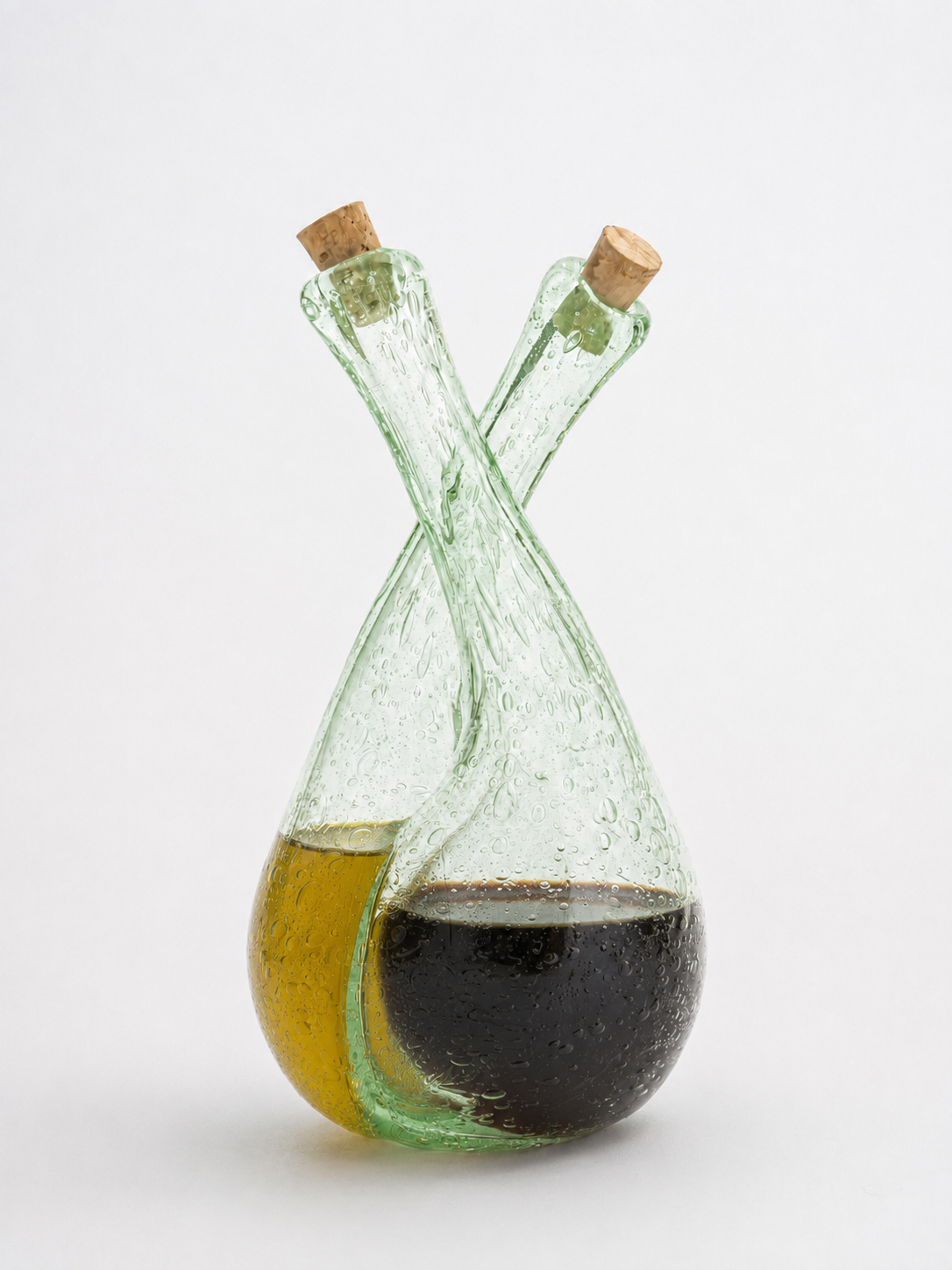
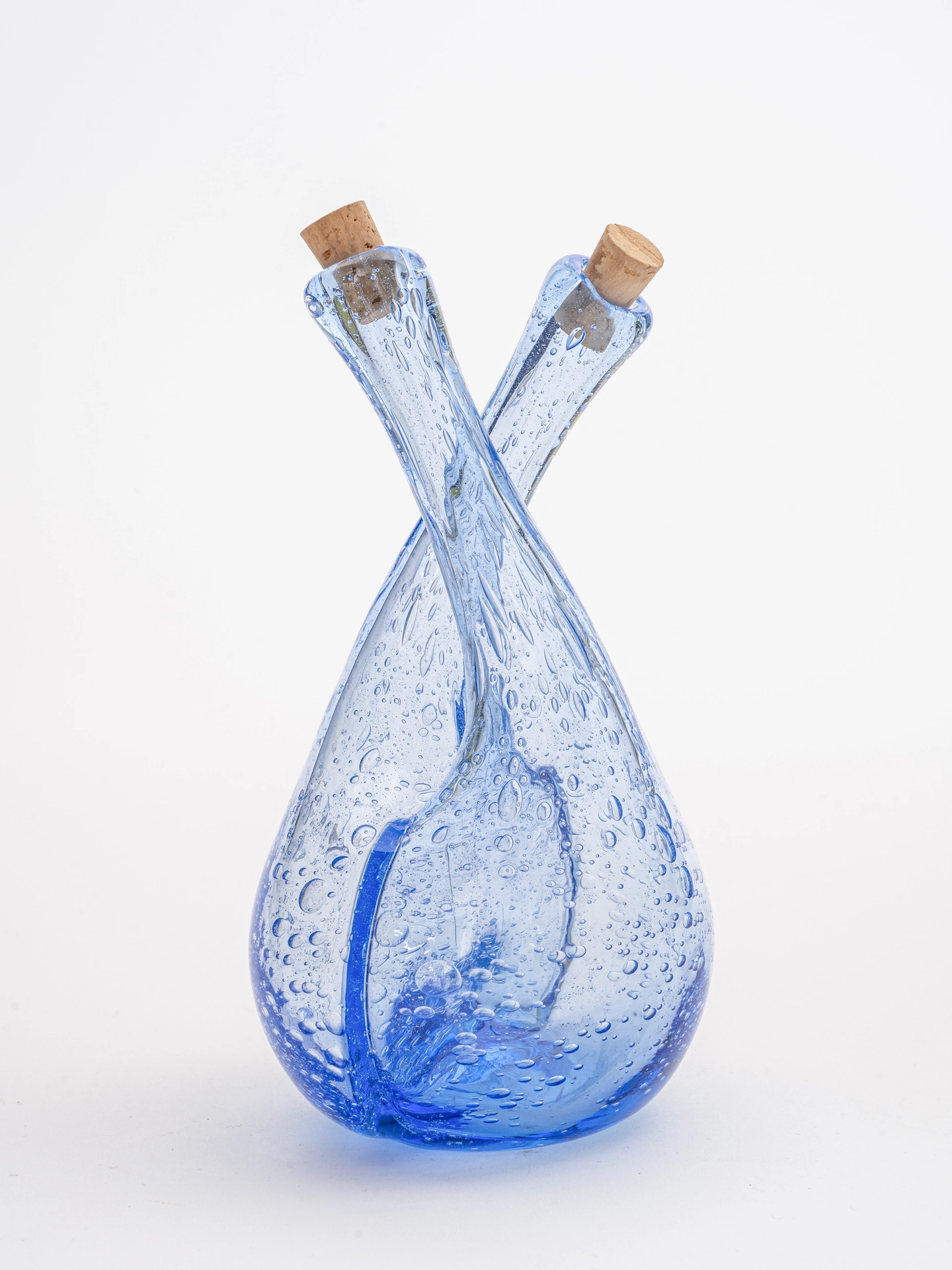
Finally, the Guédoufle, a double oil-and-vinegar cruet, is an emblematic and truly singular piece. Formed from a single hand-blown glass sphere with two separate compartments, one for olive oil and the other for vinegar, it reflects the workshop's exceptional technical mastery. The glassblower must create the internal partition at the precise moment when the material can still be shaped. On a countertop, it becomes a functional sculpture, a genuine conversation piece.
"A piece that says something about the home it belongs to."
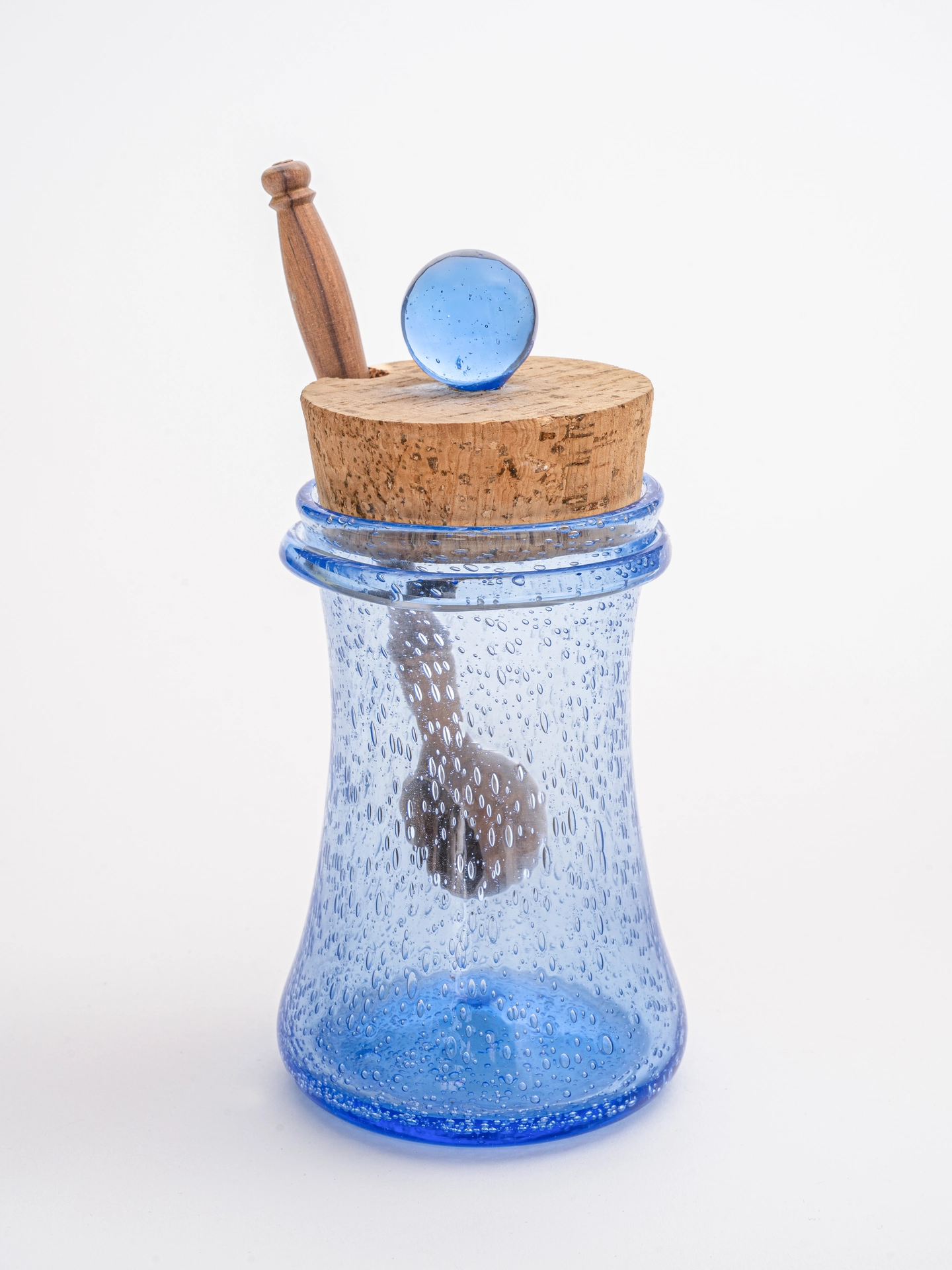
Other pieces, such as the mustard pot and the salt and pepper dishes, will look just as charming in the kitchen as on the table. Also discover the mortars, perfect for crushing a few herbs or preparing an aioli just like in Provence.
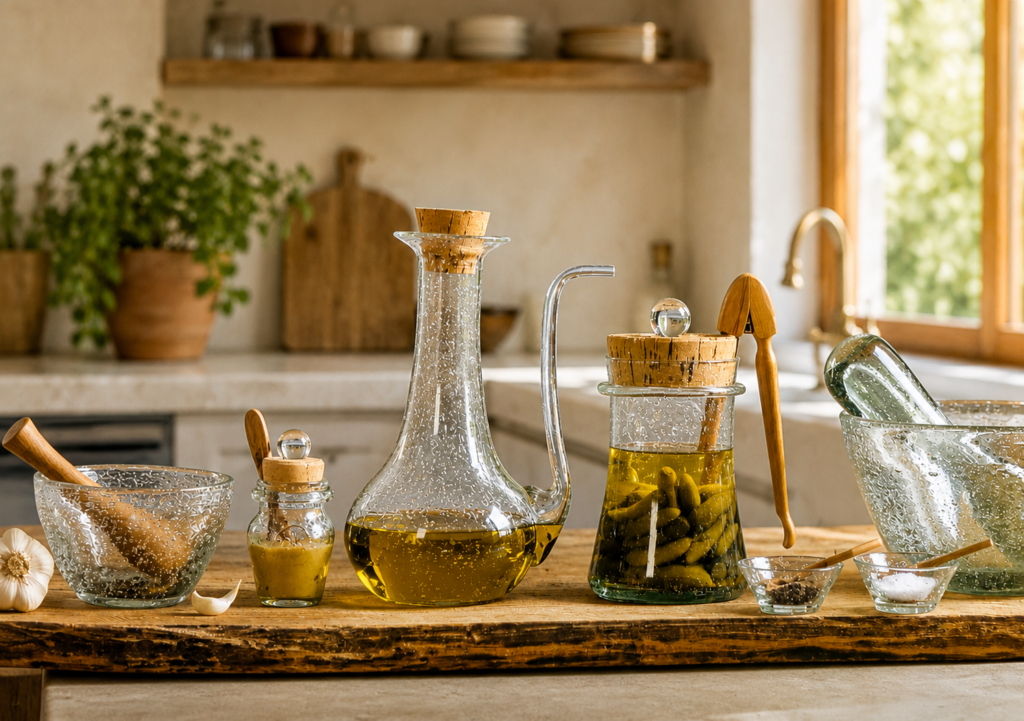
In the kitchen, Biot bubble glass pieces become far more than everyday objects. Whether alone or arranged together, jars, cruets and utensils bring plenty of charm to both modern and more traditional kitchens. Here, every object tells of a craft and a story.